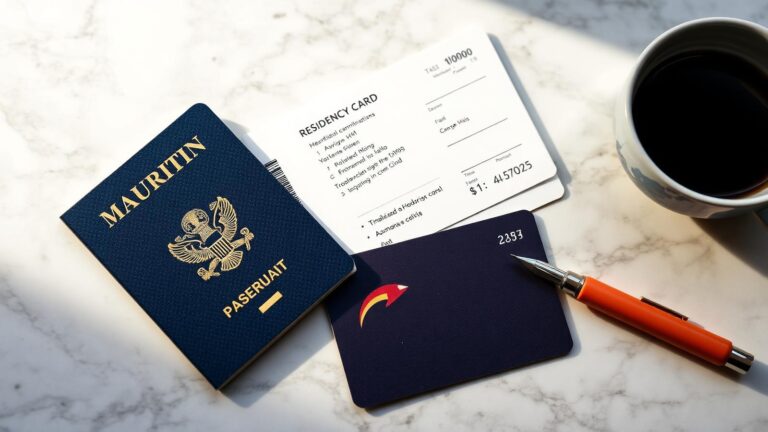
A student visa supports a genuine education plan. It is not a general promise of permanent settlement. Work during the course and permission after graduation depend on the destination, programme and individual conditions.
For a Nigerian applicant, the course, funding and current passport-specific procedures need verification before paying. Admission, immigration permission and later residence are separate decisions.
Stages of the study route
| Stage | Purpose | What remains separate |
|---|---|---|
| Admission | A confirmed place on a course | Does not itself approve immigration permission. |
| Study permission | Lawful education and stay | The student must observe the programme and activity conditions. |
| Permitted part-time work | Additional activity where allowed | Hours and eligibility are destination-specific. |
| After-study permission | A possible work or job-search stage | Not every programme or graduate qualifies. |
Document checklist
- Admission or the required student sponsorship document in the accepted format.
- Details of the particular programme, duration and delivery mode.
- Academic and language evidence required for the category.
- Financial records, payment and deposit-refund terms, and family documents where dependants are eligible.
Course, evidence and funding
Student visa requirements should be checked for the selected country and programme. Confirm the institution’s eligibility and the exact course format. A recognised institution does not mean every course has identical immigration consequences.
A student visa application needs coherent education, identity and funding evidence. Explain earlier study, gaps and the reason for the programme truthfully. A generic motivation statement cannot replace a credible plan and required documents.
Student visa sponsorship can describe institutional support in one system or funding in another context. Clarify what the official checklist means. A relative paying tuition and an institution authorised to support a student are not necessarily performing the same legal role.
Budget and study conditions
Budget for tuition, accommodation, insurance, transport, documentation and a reserve. Check how financial support must be evidenced and whether tuition payments are refundable after a refusal or delayed start.
Permitted work should not be assumed to fund the entire course. Check hours, term-time conditions and any restrictions on employment types. Family admission and a partner’s work rights require a separate review.
During study, course changes, breaks or withdrawal can affect permission. Keep attendance and completion records and ask about immigration consequences before changing institution. Professional recognition may still be required to practise a regulated occupation.
Make a payment calendar covering the deposit, tuition balance, living costs, insurance, documents and travel. Record each due date, refund condition and funding source. Consider refusal or deferral separately: what has already been spent and what reserve remains? Possible part-time earnings should not conceal a funding shortfall at a mandatory financial-evidence stage.
Checks before filing
- Check the institution, particular course, delivery mode and start date.
- Prepare funding without assuming a guaranteed future part-time income.
- Understand how refusal, a deferred intake or programme changes affect money already paid.
- Assess family eligibility and after-study permission separately from admission.
After graduation: work and residence
After-study work depends on the programme and current rules. Canada’s PGWP conditions, for example, are assessed separately from DLI status. This illustrates a country-specific check, not a universal entitlement for all international graduates.
Permanent residence requires another lawful basis and eligibility. A degree may be relevant but does not eliminate language, job or selection criteria. Prepare an alternative lawful next step if the anticipated work route does not become available.
In Canada, IRCC publishes separate PGWP conditions and warns that graduating from a DLI does not automatically establish eligibility for that permit. Check the particular programme and applicable conditions, not only the institution’s name. A statement that a college appears on a list is therefore not a complete assessment of future work permission.
Source: Canada: after-study work conditions
Common mistakes
- Treating an offer letter or tuition payment as visa approval.
- Assuming every course at a recognised institution qualifies for every after-study route.
- Relying only on a promise of future employment to establish funding.
- Overlooking the effects of leave, transfers or a change in study mode.
Frequently asked questions
Does admission guarantee approval?
No. The immigration authority assesses the application separately.
Can future part-time work always prove funding?
Do not assume it; verify the financial rules and work conditions.
Does every graduation lead to residence?
No. After-study and permanent routes have their own requirements.
What should I check before paying a deposit?
Confirm the place, refund terms for refusal or deferral, the particular programme’s suitability for the intended category and the full budget. Admission alone does not establish family or after-study work eligibility.