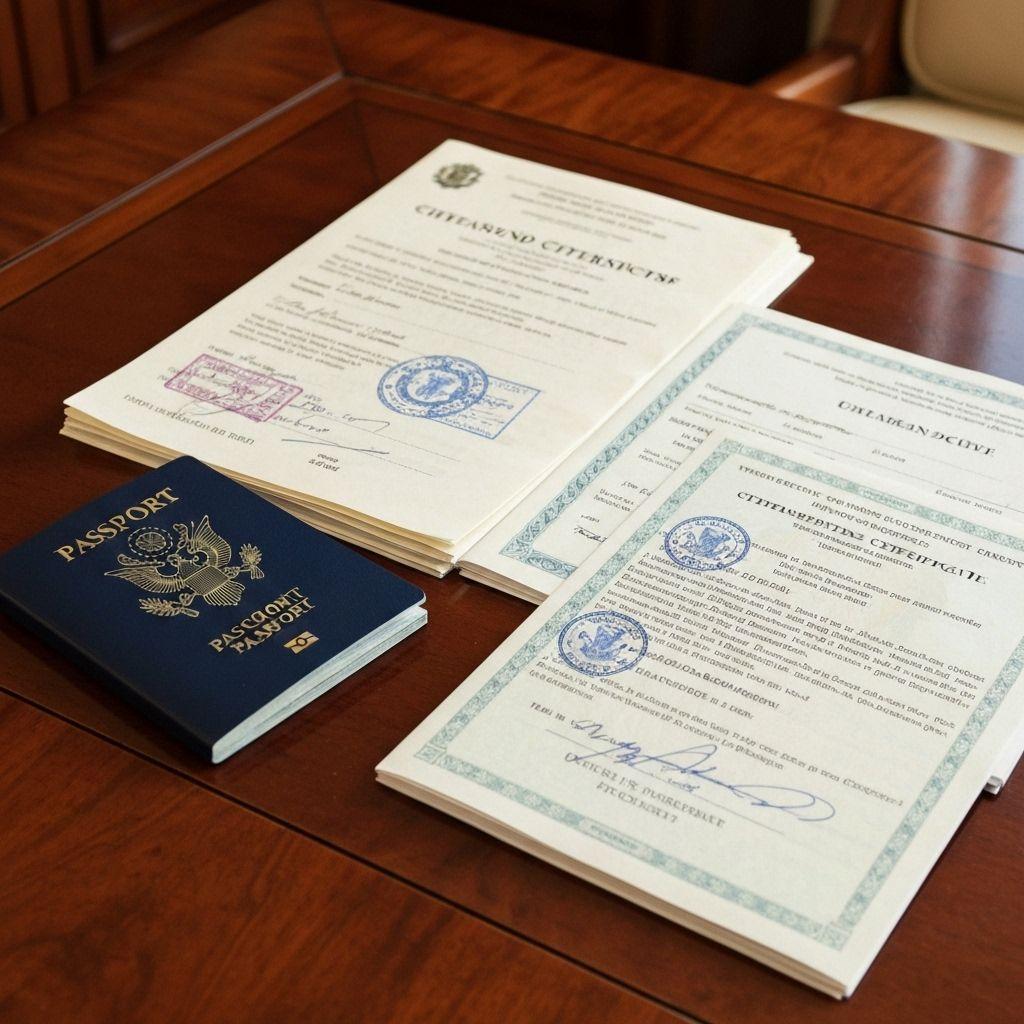
Naturalization is a process through which an eligible applicant obtains citizenship under a country’s law. It is distinct from acquiring citizenship by descent or another automatic basis. A residence card and years of presence alone do not constitute a citizenship decision.
For Nigerian readers considering another country, the destination’s rules must be assessed together with any consequences for existing nationality. Do not assume that one country’s residence period, language test or dual-citizenship policy applies everywhere.
Naturalisation and other bases
| Basis | Purpose | Evidence |
|---|---|---|
| Ordinary naturalisation | Citizenship through the general application route | Qualifying status and the prescribed residence and other conditions. |
| Special conditions | A legally recognised applicant situation | Specific evidence; not automatic exemption from every requirement. |
| Citizenship by descent | A different legal basis | The family chain and applicable nationality law. |
| Residence permission | A right to remain | Does not replace a citizenship application. |
Step-by-step plan
- Identify the applicable citizenship basis.
- Check qualifying status and residence.
- Review absence, language and other requirements.
- Prepare the timeline and evidence before filing.
- Complete the review and required final formalities.
Document checklist
- Current identity and relevant civil records.
- Decisions and evidence supporting the actual legal basis.
- Financial, professional or educational records required for the route.
- Translations and authentication where the competent authority requires them.
Eligibility and application stages
Naturalization meaning should distinguish the process from the status it produces. The authority assesses the conditions and evidence; a physical resident card is not proof that all citizenship requirements have already been met.
The naturalization process can involve application, review, interview or tests and final formalities. Stages vary by country. Some systems require a particular residence status before applying, while the treatment of earlier temporary periods can differ.
A naturalized citizen has obtained nationality through that process, rather than simply through holding permanent residence. Family members may have different routes and should not assume that one person’s application automatically covers everyone.
Residence history and personal circumstances
Prepare a truthful residence timeline with immigration decisions and travel dates. Check passports and other evidence rather than relying on memory. Explain missing records or inconsistencies; an advertised eligibility calculator may not capture every legal condition.
Language, knowledge, conduct and other requirements need checking under the destination’s rules. Exemptions must have a recognised basis. One special condition, such as a qualifying marriage, should not be treated as removal of every other requirement.
Review consequences for existing nationality and any relevant obligations. A foreign residence approval does not settle the rules on holding multiple citizenships. Use the responsible authorities for each applicable system.
Checks before filing
- The basis and rights match the official category.
- Dates and identity details are consistent.
- Current nationality-specific conditions have been checked.
- Costs and continuing responsibilities are included in the plan.
After the decision
After approval, an oath, registration or citizenship certificate may still be required. A passport is a separate document. Submission and an intermediate decision are not necessarily the completion of the entire process.
Keep original civil records and final decisions for later documentation. A spouse or child may need a separate application or another nationality basis. Plan those cases individually rather than assuming identical eligibility.
Common mistakes
- Treating an intermediate document as a final decision.
- Applying another country’s rules without checking.
- Submitting unsupported facts or an outdated checklist.
- Assuming the next status is guaranteed without assessing its conditions.
Frequently asked questions
Does every period of stay count?
No. The qualifying status and character of residence depend on the applicable rules.
Does marriage guarantee citizenship?
No. It may affect a route, but the relevant conditions remain.
Does submitting the form make a person a citizen?
No. The process and any final formalities must be completed.